Published Date-12th December 2025
The IT helpdesk has quietly become one of the most critical pillars of modern organizations. What was once viewed as a reactive support function is now a strategic enabler of productivity, employee experience, and business continuity. As digital workplaces expand and technology ecosystems grow more complex, the expectations from IT support have changed fundamentally.
In 2025, the future of the IT helpdesk is being shaped by three powerful forces: artificial intelligence, intelligent automation, and the irreplaceable human touch. Together, they are redefining how support is delivered, how problems are resolved, and how users experience technology in their day-to-day work.
Technology works best in support when it helps people feel heard and supported
Historically, IT helpdesks operated on a ticket-based, reactive model. Users encountered issues, logged requests, waited for responses, and hoped for timely resolutions. While this approach served organizations in the past, it struggles to meet the demands of today’s always-on, distributed, and digital-first environments.
Modern businesses rely on cloud platforms, remote collaboration tools, data-driven systems, and complex security frameworks. Even a minor IT disruption can lead to lost productivity, frustrated employees, and reputational risk. As a result, IT helpdesks are evolving from reactive problem-solvers into proactive experience managers.
Artificial intelligence has become the backbone of the modern IT helpdesk. In 2025, AI-driven service desks are no longer experimental; they are operational necessities. Intelligent virtual assistants now serve as the first point of contact for many support interactions, providing instant responses and guiding users through common issues without delay.
These AI systems do more than answer questions. They analyze historical incidents, user behavior, and system performance to identify patterns and predict future problems. By recognizing recurring issues or abnormal activity early, AI enables helpdesks to prevent incidents before users are even aware of them.
AI also enhances decision-making for IT teams. Through intelligent ticket classification and routing, requests are automatically prioritized and assigned to the most suitable agents. This reduces resolution times and ensures that critical issues receive immediate attention. Over time, AI learns from outcomes, continuously improving accuracy and efficiency.
While AI provides intelligence, automation delivers execution. Automation has become the engine that powers scalable and consistent IT helpdesk operations. Routine tasks that once consumed hours of manual effort, such as password resets, access provisioning, system updates, and compliance checks, are now handled through automated workflows.

Automation reduces waiting time and improves response speed
In 2025, automation spans the entire IT support lifecycle. From onboarding new employees to managing device configurations and enforcing security policies, automated processes ensure consistency across environments. This reduces errors, improves compliance, and allows IT teams to operate efficiently even as user demands increase.
Automation also plays a crucial role during incidents. Predefined workflows enable faster escalation, remediation, and communication, minimizing downtime and reducing the impact on business operations. The result is an IT helpdesk that responds not only faster, but smarter.
One of the most significant changes in the future of IT helpdesks is the shift from a service-centric mindset to an experience-driven approach. Users no longer evaluate IT support solely on resolution speed. They care about ease of access, clarity of communication, and how supported they feel throughout the process.
Modern helpdesks integrate seamlessly into digital workplaces, offering support through multiple channels such as chat, self-service portals, and collaboration platforms. AI-powered knowledge bases provide instant answers, while contextual assistance helps users resolve issues without disrupting their workflow.
This focus on experience transforms the helpdesk into a strategic function that directly influences employee satisfaction and productivity.
Despite the rapid advancement of AI and automation, the human element remains central to effective IT support. Technology can resolve technical issues, but it cannot replace empathy, judgment, and nuanced understanding.
Complex incidents, high-pressure outages, and sensitive situations require human intervention. Users often seek reassurance as much as solutions, especially when issues impact critical work. Skilled IT professionals provide clarity, calm, and confidence during such moments, qualities that no algorithm can fully replicate.
In the future IT helpdesk, human agents are not removed from the equation; they are elevated. By offloading repetitive tasks to AI and automation, IT professionals can focus on strategic problem-solving, relationship-building, and continuous improvement.
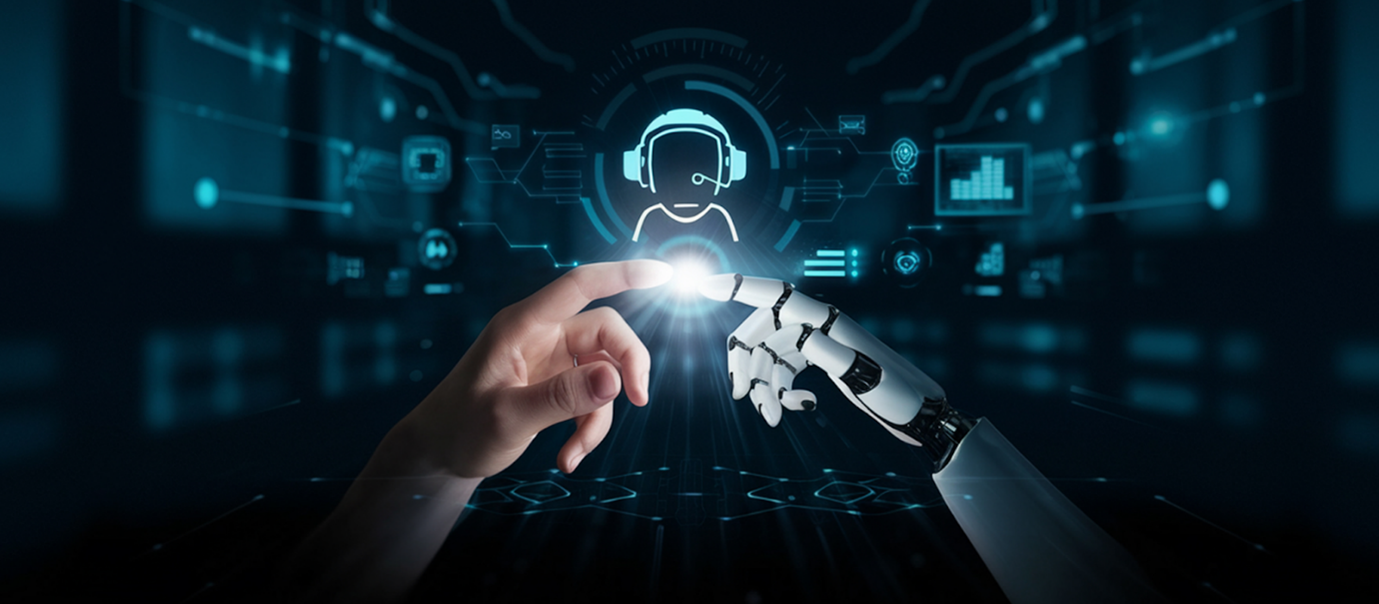
Balanced systems deliver reliable and friendly service
The most effective IT helpdesks in 2025 operate on a collaborative model where humans and intelligent systems complement each other. AI handles speed, scale, and data-driven insights. Automation ensures reliability and consistency. Humans bring context, creativity, and care.
This collaboration reduces burnout among IT teams by eliminating repetitive workloads and enabling more meaningful work. It also leads to better outcomes for users, who receive faster resolutions without sacrificing personalized support.
Organizations that embrace this balanced approach are better positioned to adapt to changing technologies and evolving user expectations.
As cyber threats grow more sophisticated, the IT helpdesk plays a critical role in maintaining organizational security. AI-powered monitoring tools can detect unusual behavior, flag potential vulnerabilities, and trigger automated responses to mitigate risks.
In 2025, helpdesks are deeply integrated with security and compliance frameworks. Automated identity management, access controls, and policy enforcement ensure that users receive the access they need without compromising security. When incidents occur, intelligent systems provide real-time insights to support rapid containment and recovery.
This integration transforms the helpdesk into a frontline defense against digital risk
Organizations looking to future-proof their IT support must move beyond isolated tool adoption. Success lies in building an ecosystem where AI, automation, and human expertise work in harmony.
This requires investing not only in technology but also in people. Continuous learning, change management, and a strong focus on user experience are essential. IT leaders must redefine metrics of success, shifting from ticket volume to outcomes such as productivity, satisfaction, and resilience.

Efficient helpdesks create better workplace experiences
The future of the IT helpdesk is not about choosing between machines and humans. It is about designing intelligent support systems that empower people through technology.
In 2025 and beyond, the most successful IT helpdesks will be those that combine AI-driven intelligence, automation-led efficiency, and human-centered support. Together, these elements create an IT experience that is proactive, resilient, and genuinely human, one that enables organizations to thrive in an increasingly digital world.

The future IT helpdesk focuses on proactive, AI-driven support that combines automation with human expertise to deliver faster and more personalized experiences.
AI enables intelligent ticket routing, predictive issue detection, virtual assistants, and data-driven insights that reduce resolution times and operational workload.
No. Automation eliminates repetitive tasks, allowing IT professionals to focus on complex problem-solving, strategy, and user engagement.
Human empathy, communication, and critical thinking are essential for handling complex issues, building trust, and managing high-impact incidents.
By adopting AI-enabled tools, investing in automation, upskilling IT teams, and prioritizing user experience alongside operational efficiency.