Published Date-26th December 2025
The conversation around AI in IT has shifted dramatically. A few years ago, it was all about tools, automation, and fear “Will AI replace IT jobs?” Today, the real question is far more practical and powerful: “Is your IT department ready to work with AI?” Because the truth is, AI isn’t coming for IT teams. It’s coming to them. And the organizations that thrive won’t be the ones with the most advanced AI tools, but the ones whose people know how to use them intelligently, ethically, and confidently.
Future-proofing your IT department is no longer about adding more servers or upgrading systems. It’s about training minds helping teams evolve from reactive problem-solvers into proactive, AI-enabled decision makers.
AI training transforms IT from reactive support to a strategic powerhouse
Future-proofing is often misunderstood as predicting the next big technology trend and adopting it early. In reality, no organization can accurately forecast every technological shift. What businesses can do is build teams that are adaptable, curious, and equipped to learn continuously.
For IT departments, future-proofing means creating an environment where professionals can confidently handle change. It means ensuring that when new AI-driven tools are introduced, teams understand not just how to use them, but why they work and where their limitations lie.
AI training plays a foundational role here. It equips IT professionals with the mindset and knowledge needed to evolve alongside technology instead of constantly playing catch-up.
AI is already deeply embedded in modern IT operations. It supports ticket classification, predicts system failures, identifies security anomalies, and optimizes cloud costs. Yet, despite its widespread use, many IT teams interact with AI as end users rather than informed collaborators. This gap between usage and understanding creates risk. When teams do not fully grasp how AI systems generate insights, they may either over-rely on them or dismiss them entirely. Neither approach delivers value. AI training addresses this challenge by helping IT professionals understand the logic behind AI-driven recommendations. With this knowledge, teams can validate outputs, question anomalies, and apply human judgment where it matters most. This balance between intelligence and intuition is what makes AI truly powerful in an IT environment.
Organizations that delay AI training often do so unintentionally. They invest in new platforms, expecting productivity gains to follow naturally. When results fall short, the issue is rarely the technology itself.
Without AI training, IT teams may struggle to integrate new systems into their workflows. Automation may feel imposed rather than helpful, leading to resistance or inconsistent adoption. Over time, this disconnect can reduce morale, increase operational errors, and slow innovation.
There is also a strategic cost: As competitors build AI-ready IT teams, organizations that fail to upskill risk falling behind in service quality, security posture, and agility. In an increasingly digital economy, this gap can quickly become a business disadvantage.
One of the biggest misconceptions about AI training is that it requires advanced mathematical or programming expertise. In reality, effective AI training for IT teams is practical, contextual, and role-specific.

AI driven insights empower IT teams to anticipate issues
For service desk professionals, AI training focuses on understanding how intelligent ticketing systems prioritize requests and suggest resolutions. For infrastructure teams, it involves interpreting predictive analytics that signal potential system failures. For cybersecurity teams, it means learning how AI identifies abnormal behavior and what actions should follow. Across roles, AI training also introduces foundational concepts such as data quality, algorithmic bias, and ethical responsibility. This ensures that IT teams not only use AI effectively but also responsibly.
When IT teams receive proper AI training, their approach to operations changes fundamentally. Instead of reacting to incidents after they occur, teams learn to anticipate issues using predictive insights.
AI-trained professionals can analyze trends across systems, identify root causes faster, and implement preventative measures. This reduces downtime, improves service reliability, and allows IT departments to operate with greater confidence and control.
Over time, AI training shifts IT operations from a firefighting model to a strategic one. Teams spend less time resolving repetitive issues and more time improving systems and processes.
The service desk is often the most visible face of IT. AI-powered tools have transformed this space by automating ticket routing, suggesting solutions, and even resolving common issues autonomously.

Scalable platforms help teams build, deploy, and innovate with confidence
However, without AI training, service desk teams may feel disconnected from these systems. When professionals understand how AI makes decisions, they can fine-tune responses, intervene when needed, and maintain a human touch in user interactions.
AI training ensures that automation enhances empathy rather than replacing it. This results in faster resolutions, consistent service quality, and improved end-user satisfaction.
Cybersecurity is one of the most critical areas where AI and human expertise must work together. AI can process vast amounts of data at speeds that no human can match, identifying potential threats in real-time.
Yet, AI outputs are only as effective as the people interpreting them. AI training helps security teams understand why certain alerts are triggered, how to assess their severity, and when to escalate responses.
With trained teams, AI becomes a force multiplier rather than a source of noise. This combination of machine intelligence and human judgment significantly strengthens an organization’s security posture.
For IT leaders, AI training provides clarity in an increasingly complex decision-making landscape. AI systems generate insights, forecasts, and recommendations, but they do not replace strategic thinking.

Continuous AI learning builds a culture of experimentation and modernization
Leaders who understand AI are better equipped to evaluate risks, allocate resources, and align technology initiatives with business objectives. They can communicate more effectively with stakeholders, justify investments, and guide their teams with confidence.
AI-literate leadership also sets the tone for adoption. When leaders embrace learning, teams are more likely to follow.
Technology adoption succeeds or fails based on culture. AI training contributes to a culture where learning is continuous, and experimentation is encouraged.
When IT professionals feel supported in developing new skills, fear gives way to curiosity. Instead of worrying about job security, teams focus on expanding their impact and value.
An AI-ready culture is one where people see change as an opportunity rather than a disruption. This mindset is essential for long-term resilience.
The most effective AI training programs are phased and practical. Rather than introducing complex concepts all at once, organizations begin with foundational knowledge and gradually build expertise.
By aligning training with real IT use cases, learning becomes relevant and immediately applicable. Over time, this approach builds confidence and momentum without disrupting daily operations.
Organizations that invest in AI training see benefits that extend beyond IT. Faster incident resolution, improved security, and smarter decision-making directly impact customer experience and business performance.
AI-trained IT teams also become strategic partners to the business. They contribute insights, recommend improvements, and support innovation initiatives with confidence.
In the long run, this investment reduces dependency on external consultants and creates a more self-sufficient, future-ready organization.
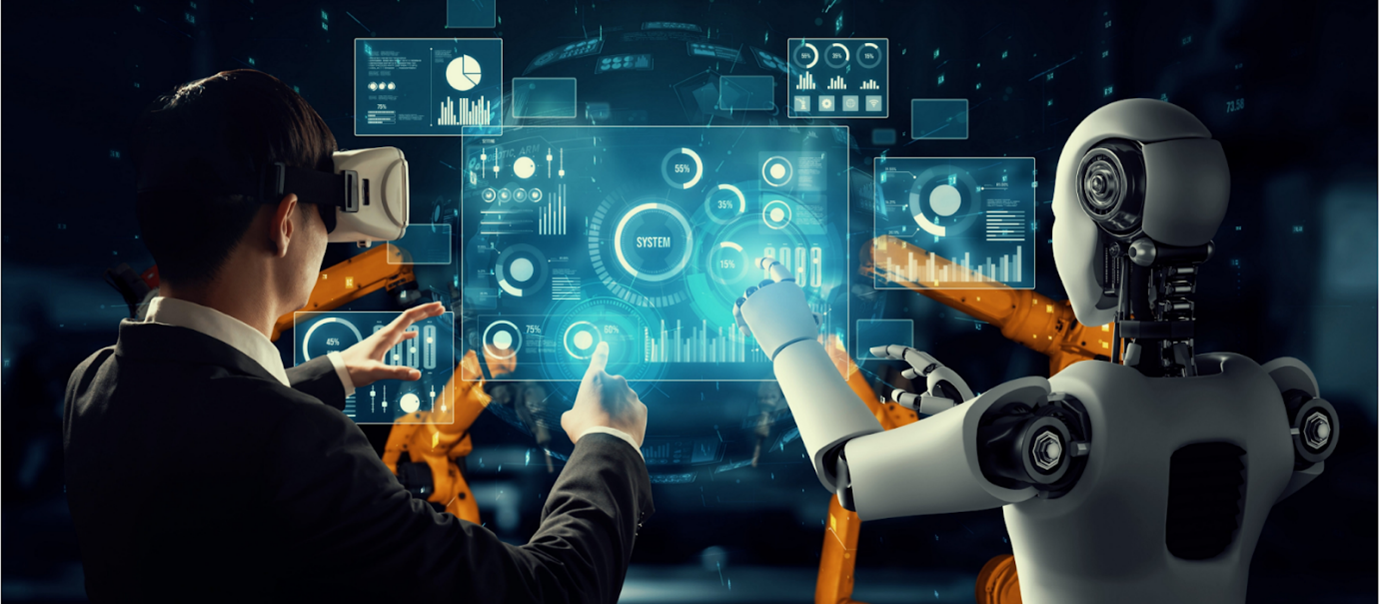
AI skills safeguard the organization against talent gaps and technology shifts
AI will continue to evolve, but its true value lies in how people use it. Organizations that invest in AI training are not just upgrading skills; they are building confidence, adaptability, and long-term resilience. Future-proofing your IT department starts with empowering your people. When technology and human intelligence move forward together, the future becomes an opportunity rather than a challenge.

It means equipping IT teams with adaptable skills and continuous learning capabilities so they can evolve with technology rather than struggle against it.
Yes, although the depth of training varies. A baseline understanding of AI is becoming essential across IT functions.
By automating repetitive tasks and enhancing prioritization, AI training enables IT professionals to concentrate on higher-value work, thereby reducing stress and burnout.
Many organizations notice improvements in efficiency and confidence within a few months of implementing targeted training programs.
AI training can be phased and scaled, making it more cost-effective than large technology overhauls with limited adoption.